Author name: Huzam

Bulletin

BOI moves to secure 3,674 jobs as Hela Apparel’s winding up exposes wider collapse

The Board of Investment (BOI) has moved to reassure workers formerly attached to Hela Clothing (Pvt) Ltd and Foundation Garments (Pvt) Ltd that their jobs remain secure, days after parent company Hela Apparel Holdings PLC filed for a court-ordered winding up.In a statement, the BOI confirmed that 3,674 employees, comprising 251 executives, 393 staff and 3,030 team members, had already been absorbed into Emerald Clothing (Pvt) Ltd under a group restructuring exercise completed before the winding-up filings, with continuity of service preserved.The transfer took place in two phases, the BOI said, with 2,504 employees moved from the Palapathwela and Thihariya facilities and the Emerald head office effective 1 May, and a further 1,170 employees from the Naula and Ukuwela facilities and the head office effective 1 June. The BOI, which said it facilitated and monitored the process through its Industrial Relations Department, added that it would continue to engage with Emerald Clothing and other stakeholders to ensure a smooth transition.The reassurance follows one of the more dramatic corporate collapses on the Colombo Stock Exchange (CSE) in recent years. Hela Apparel Holdings’ board resolved on 4 August to seek a winding up under the Companies Act, and separate petitions were filed in the Commercial High Court on 5 August in respect of the parent company and its two main operating subsidiaries. In its disclosure to the CSE, the company said its board had reviewed its assets, liabilities, liquidity, indebtedness and cash flow position and concluded it was unable to meet its debt obligations, adding that restructuring, new investment and asset sales had all been explored and had failed.It is a strikingly different story from the one Hela told investors less than five years ago. The company’s initial public offering opened in January 2022 at Rs. 15 a share, seeking to raise Rs. 4 billion for a 20.5 per cent stake and valuing the group at roughly Rs. 19.5 billion. It was the largest listing by value in over a decade and was oversubscribed by 5.4 times. Group CEO Dilanka Jinadasa framed the listing around Hela’s transformation into an end-to-end apparel supply chain group with, in his words, a strong global footprint, particularly in Africa. The group had built manufacturing operations in Kenya, Egypt and Ethiopia alongside Sri Lanka, with the Kenyan investment in particular positioned to secure duty-free access to the US market under the African Growth and Opportunity Act.The company’s own audited accounts show how quickly that footprint became a burden. Group revenue climbed from Rs. 32.2 billion in FY2020/21 to a peak of Rs. 95.3 billion in FY2022/23, and gearing fell from 4.0 times to 2.2 times in the year of listing as IPO proceeds were used to pay down debt. But profitability cracked almost immediately: the group swung to a net loss of Rs. 3.3 billion in FY2022/23, even as revenue was still rising, before a 26 percent revenue contraction in FY2023/24 and a partial, acquisition-driven recovery to Rs. 83.4 billion in FY2024/25 that still came with an operating loss of Rs. 15.7 billion and a group net loss of Rs. 22.9 billion.That year also brought a visible retreat from the global ambitions of the IPO. In its FY2024/25 annual report, the company said it had ceased manufacturing in Ethiopia and divested two of its six Sri Lankan facilities as part of a restructuring of its private-label manufacturing division, while completing a Rs. 1.6 billion rights issue and integrating its 2024 acquisition of Focus Brands, relaunched as Hela Brands, into a new licensing division.  The boardroom churned alongside the balance sheet: four directors stood down during the year, and long-serving Chairman A.R. Rasiah, who had led the group since 2018 through its listing, announced his retirement effective 29 December 2025.Auditors Deloitte declined to express an opinion on the FY2024/25 accounts, citing overdue trade payables, arrears on loan installments and breaches of financial covenants with a bank, against corporate guarantees of Rs. 38.2 billion provided across the group. As at 31 March 2025, the group’s current liabilities exceeded its total assets by Rs. 6.6 billion and it was sitting on a net liability position of Rs. 11.0 billion, a reversal from positive equity of Rs. 10.3 billion just a year earlier. The disclaimer noted that the going-concern basis rested on a proposed bank debt restructuring and a fundraising of Rs. 3.0-4.4 billion from strategic investors, neither of which auditors could verify as at their reporting date.The nine months to 31 December 2025 showed no turnaround. Group revenue fell by close to 29 per cent year-on-year to Rs. 43.95 billion, gross profit more than halved, and the net loss widened to Rs. 7.59 billion from Rs. 6.46 billion, taking accumulated losses to Rs. 31.6 billion and group equity to negative Rs. 18.8 billion. The shares, which had already been placed on the CSE Watch List in December 2025, closed the quarter at Rs. 3.10, down from Rs. 5.90 a year earlier and a fraction of the Rs. 15.00 IPO price, valuing the group at just over Rs. 5 billion against a projected market capitalisation of Rs. 19.5 billion at listing.The final months brought regulatory as well as financial reckoning. The Securities and Exchange Commission rejected a request to defer a trading suspension that took effect from 18 June, after banks and creditors did not approve the proposed debt restructuring, and the company subsequently disclosed that its board had shrunk to just two directors, well short of the five required under CSE listing rules. One market analyst’s assessment of that final stretch was blunt: by that point, the crisis facing Hela was arguably less about debt than about a collapse in governance itself.Ahead of the court petitions, the group had already been selling down assets, including its UK-based Focus Brands business to shareholders of Emerald Investments for US$ 8 million, and moving Sri Lankan factory operations and staff to Emerald Clothing. In its last full financial year, Hela still generated export revenue of US$ 76.7 million, roughly 1.5 per cent of

Bulletin

Govt. pledges support to boost apparel exports and foreign exchange earnings

A high-level discussion aimed at identifying immediate solutions to challenges facing the country’s apparel sector and strengthening the export-led economic growth was held today (22) at the Presidential Secretariat under the patronage of President Anura Kumara Dissanayake. The meeting brought together leading apparel industry representatives, investors and senior government officials to discuss obstacles confronting the sector and measures required to support the implementation of the Export Development Board’s (EDB) new export strategy, the President’s Media Division said in a statement. Addressing the gathering, President Dissanayake reaffirmed the government’s commitment to strengthening Sri Lanka’s export economy and outlined several policy initiatives designed to enhance the sector’s competitiveness and increase foreign exchange earnings. The President emphasized the importance of expanding industrial operations into rural areas, noting that such a move could significantly contribute to export growth while generating employment opportunities across the country. He invited investors to participate in the initiative and highlighted plans to introduce a government-supported “Plug and Play” mechanism, under which essential infrastructure and factory facilities would be provided to facilitate investment, the PMD noted. Explaining the current economic situation, President Dissanayake stated that while investments in Sri Lankan rupees had increased, it was vital to strengthen dollar-earning sectors to safeguard the country’s foreign exchange position. He noted that sustainable economic recovery would depend on increasing foreign currency earnings while maintaining control over rupee-denominated expenditure. Land-related issues faced by investors were also discussed during the meeting. The President assured participants that the government would take steps to ensure the value of land assets and maintain policy consistency, adding that legal reforms were already underway to address these concerns. Attention was also drawn to challenges faced by local raw material suppliers under the Value Added Tax (VAT) system. The President requested industry representatives to submit proposals on alternative relief measures that could be introduced to ease the burden on suppliers. Participants further discussed measures to expand free trade agreements and increase export quotas in order to create greater market access opportunities for Sri Lankan products. The meeting also reviewed progress on trade facilitation initiatives. It was revealed that the National Single Window for Trade is expected to become operational by the end of July, while the National Single Window for Investment is scheduled for completion before the end of the year. President Dissanayake additionally stressed the need to strengthen legal and technological mechanisms to prevent illicitly acquired wealth from being transferred overseas. He also stated that new legislation aimed at combating organized crime, while protecting citizens’ rights, would be introduced to replace the Prevention of Terrorism Act (PTA). Industry representatives welcomed the opportunity to directly engage with the President and raised concerns affecting their operations, according to the PMD. They also proposed the establishment of a monthly forum to facilitate regular discussions with relevant government officials. Responding positively, the President instructed officials to take the necessary steps to establish such a mechanism, the PMD added.The Minister of Labour and Deputy Minister of Finance and Planning, Dr. Anil Jayantha Fernando, the Secretary to the Ministry of Finance, Planning and Economic Development Harshana Suriyapperuma, the Controller General of Imports and Exports, Upulmali Premathilaka, the Chairman of the Sri Lanka Export Development Board, Mangala Wijesinghe, representatives of the Inland Revenue Department and Sri Lanka Customs, along with leading business leaders and investors from the apparel sector attended the meeting. Source: http://adaderana.lk/news/cmqp9ue1c000e356p5epyllhq

Bulletin

Sri Lanka’s apparel industry at risk under EU GSP+, JAAF warns

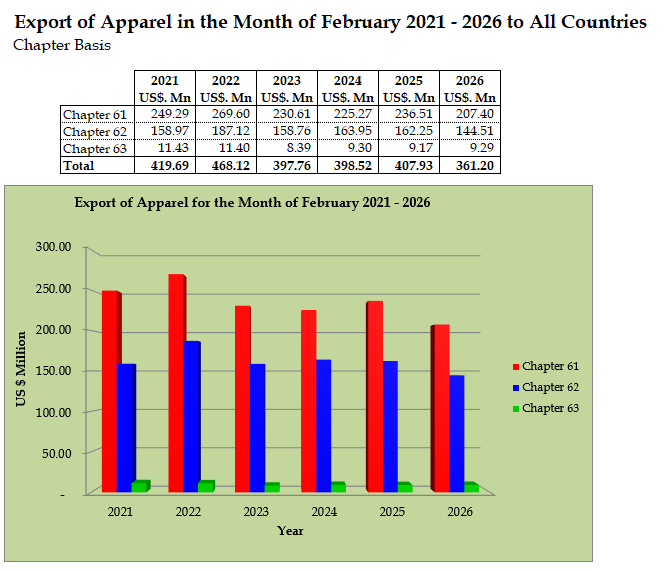
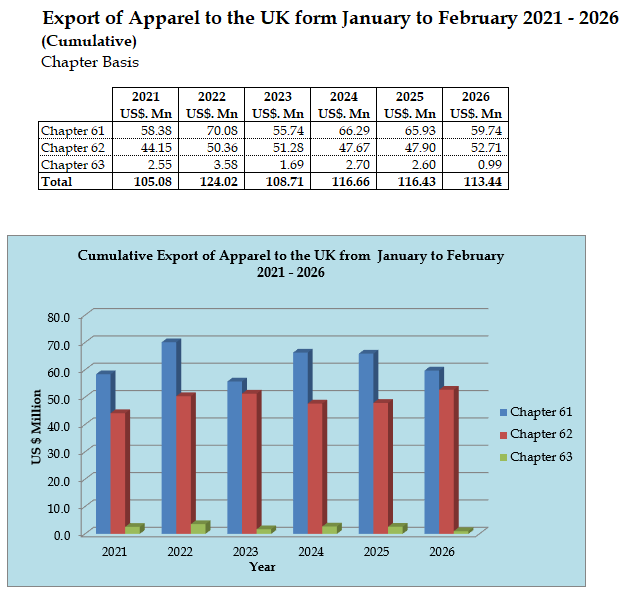
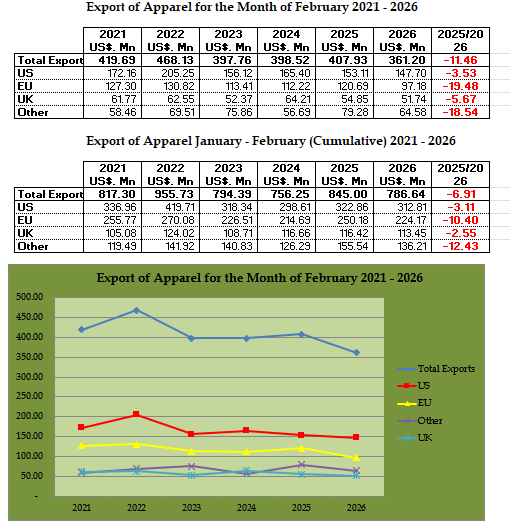
The EU adopted new GSP+ rules in May 2026 that will require higher compliance on human rights, labour, environmental standards and governance from the start of 2027. Under these revised requirements, Sri Lanka must meet obligations on disability rights, child protection during conflict, labour inspection, the Paris Agreement and organised crime, in addition to previously established criteria. The EU has introduced a stricter “urgent withdrawal” mechanism for non-compliance and extended the review cycle from two to three years, meaning Sri Lanka would have fewer chances to address any compliance issues identified. Current GSP+ trade preferences will be maintained until the end of 2028, but future access is not automatic. According to JAAF, the EU requires Sri Lanka to formally reapply under the new regulations, submitting a comprehensive action plan in 2027 detailing specific, evidence-supported steps towards meeting the enhanced conditions. During a recent GSP+ review, officials from Brussels made clear that “the action plan cannot be a paper exercise; this time, Sri Lanka will have to show credible, demonstrable action, supported by evidence of implementation”. The apparel sector, which provides jobs for more than 350,000 people and accounts for 40-45% of the country’s total exports, is particularly reliant on GSP+. JAAF claims the sector’s export earnings exceeded $5bn in December 2018, less than two years after the restoration of GSP+ status by the EU, underscoring the scheme’s importance to the industry’s performance. One challenge highlighted by JAAF is the low take up of GSP+ benefits by Sri Lankan exporters, which has remained between 49% and 59%. This is largely due to the EU’s rules of origin, which stipulate that garments must be manufactured from domestically produced yarn. Most Sri Lankan apparel makers rely on imported textiles that do not qualify under these conditions. JAAF claims that investments in local fabric production, agreements with regional partners and negotiations with the EU for more flexible rules could help increase utilisation. The time frame for action is narrowing. Sri Lanka’s categorisation as an upper-middle-income country by the World Bank in July 2026 places it close to the GSP+ exit threshold. If this income level is maintained for three years, Sri Lanka risks losing access to the scheme. JAAF suggests Sri Lanka begins early reapplication in 2027 to avoid any potential disruption to market access, noting that late application could see apparel exports face Most Favoured Nation tariffs as soon as 2029 if renewal is denied. EU Ambassador Carmen Moreno recently told the Sri Lankan-German Business Forum that GSP+ “has delivered mixed results in Sri Lanka,” noting that manufacturing remains a smaller part of GDP compared to other export-driven economies. Moreno encouraged Sri Lanka to pursue reforms and industrial investment, observing that the country has yet to realise the full potential of the preferences already available. JAAF maintains that strengthening compliance and improving utilisation rates ahead of the 2027 application will be essential if Sri Lanka’s garment sector is to retain its access to the EU market under the revised GSP+ scheme. Earlier this year, JAAF shared that Sri Lanka’s apparel exports dropped by 11.46% in February 2026, as key global markets experience increased strain, with the EU recording the steepest fall. “Sri Lanka’s apparel industry at risk under EU GSP+, JAAF warns” was originally created and published by Just Style, a GlobalData owned brand. Source: https://finance.yahoo.com/economy/policy/articles/vietnam-forced-labor-ban-could-202713784.html?fr=sycsrp_catchall&guccounter=1

Bulletin

Sri Lanka secures 10% US tariff rate: JAAF thanks the President and Government for decisive action

Today’s announcement by USTR of the finality of the Section 301 investigations into countries’ ability to impose and effectively enforce a prohibition on the importation of goods produced with forced labour sees 18 countries placed on a 10% tariff, with the balance of 42 countries facing a 12.5% tariff. Initial indications were that Sri Lanka would fall into the 12.5% category, a position that would have placed the country at a real disadvantage against a number of key competitor nations. Following Sri Lanka’s submissions to the USTR earlier this month, JAAF is pleased to see that Sri Lanka is now among the countries placed on the 10% tariff rate, on par with competitors including Bangladesh, Pakistan, India, and Cambodia. Parity of tariffs is something JAAF has consistently and actively lobbied for, and we are extremely appreciative of the efforts of His Excellency President Anura Kumara Dissanayake and the  Government of Sri Lanka in ensuring that strong representations were made to the US authorities to secure this outcome. Special mention must be made of His Excellency Mahinda Samarasinghe, Sri Lanka’s Ambassador to the United States, and Mr K. A. Vimalenthirajah, who, together with the teams at the Department of Commerce and our Embassy in Washington, worked tirelessly on this initiative over recent months. Sri Lanka’s apparel industry competes in a crowded field, and even a 2.5 percentage point difference in tariff treatment can be the difference between winning and losing an order to a rival sourcing destination. Securing parity with Bangladesh, Pakistan, India, and Cambodia protects the competitiveness of an industry that remains the country’s largest export earner and a major source of employment, particularly for women, across the country. JAAF recognises that this result did not happen by chance. It reflects sustained, coordinated engagement between industry and  government at every level, from the submissions made to USTR to the direct representations carried out in Washington. We view this as a strong example of what can be achieved when the private sector and government work in close partnership on issues that directly affect Sri Lanka’s export competitiveness. We remain committed to continuing this collaboration, both to safeguard the gains secured on Thursday and to ensure Sri Lanka’s apparel and textile industry is well positioned to compete on a level playing field internationally. Source: https://www.lankabusinessnews.com/sri-lanka-secures-10-us-tariff-rate-jaaf-thanks-the-president-and-government-for-decisive-action/

Bulletin, Uncategorized

India, Sri Lanka seek deeper textile trade ties

India and Sri Lanka have renewed efforts to strengthen bilateral trade and investment in the textile and apparel sector, with industry stakeholders from both countries exploring opportunities to develop stronger supply-chain linkages. The discussions took place at the India–Sri Lanka Textile Trade Forum held at the BMICH in Colombo on 6 August, on the sidelines of Intex Sri Lanka 2026. The forum was organised by Worldex India with the support of the High Commission of India and brought together representatives of the textile and apparel industries of the two countries, including leading business chambers and industry bodies. India’s participation at Intex Sri Lanka 2026 was led by the special ‘Incredible Textiles of India’ Pavilion, supported by leading Export Promotion Councils under the Ministry of Textiles and the Department of Commerce, including the Pharmaceuticals Export Promotion Council of India (PDEXCIL), the Cotton Textiles Export Promotion Council (TEXPROCIL) and the Man-Made Textiles Research Association (MATEXCIL). More than 80 Indian exhibitors, Export Promotion Councils and industry bodies participated in the exhibition, showcasing capabilities spanning the textile value chain. High Commissioner of India Santosh Jha visited the India Pavilion and interacted with participating Indian exhibitors and industry representatives. Addressing the Textile Trade Forum, Minister of Trade, Commerce, Food Security and Cooperative Development Wasantha Samarasinghe and Deputy Minister of Industry and Entrepreneurship Development Chathuranga Abeysinghe highlighted the opportunities available in Sri Lanka for Indian exporters and investors, particularly in the textile and apparel sector. Representatives of prominent business chambers, including the Joint Apparel Association Forum (JAAF), as well as leading businesses, also participated in the forum, providing an opportunity for direct interaction between industry stakeholders. High Commissioner Jha highlighted the strength of the India–Sri Lanka commercial partnership and the potential to further expand bilateral trade and investment through stronger supply-chain linkages and industry-to-industry partnerships in textiles. The textile and apparel sector remains an important component of the economic relationship between India and Sri Lanka. The forum provided a platform for businesses from both countries to explore new areas of cooperation and develop mutually beneficial commercial partnerships. Source:https://www.themorning.lk/articles/xKsPSsM1eCD8x1xxnsYX

Bulletin

US$ 20.4 m Asahi Dyes plant strengthens apparel supply chain

Sri Lanka’s  apparel industry is set to gain greater  supply-chain resilience and export competitiveness with the opening of a US$20.4 million specialty chemicals manufacturing facility by Asahi Dyes and Chemicals SL (Pvt) Ltd at the Biyagama Export Processing Zone. The facility, established through a partnership between Japan’s Asahi Dyes and Chemicals Co., Ltd. and Sri Lanka’s Asons Ltd., will create 281 direct employment opportunities while bringing advanced Japanese manufacturing technology and international production standards to Sri Lanka. Board of Investment (BOI) Chairman Duminda Hulangamuwa said the investment would help strengthen the vertical integration of the country’s apparel industry, which has developed into a sophisticated, technology-driven sector over the past several decades. He stressed the importance of further developing the local supply chain while continuing efforts to diversify Sri Lanka’s export base into high-value manufacturing and other emerging sectors. Clothing The Biyagama facility will manufacture textile dyes, printing chemicals and finishing chemicals used by the textile and apparel industry, with production targeting export markets across Asia and Southeast Asia. Founded in 1932, Asahi Dyes and Chemicals has established an international presence in specialty chemicals, with expertise in sulfur chemistry, pharmaceutical intermediates, electronic chemicals and high-performance textile dyes. The company operates in Japan, China and Vietnam. The Sri Lankan operation is also linked to Italy’s Tonello, a global technology company specialising in garment washing, dyeing, finishing and sustainable textile processing solutions. The partnership is expected to facilitate technology transfer and international knowledge exchange. Sustainability has been incorporated into the facility’s design and operations, which comply with LEED v4 BD+C green building standards and include water conservation, energy optimisation, advanced wastewater treatment and carbon-emission reduction measures. The investment is expected to reduce the apparel sector’s dependence on imported chemical inputs, improve supply-chain efficiency, develop skilled employment and enhance the competitiveness of Sri Lanka’s export manufacturing sector. The project also supports the BOI’s strategy of attracting technology-intensive, environmentally sustainable and export-oriented investments to strengthen Sri Lanka’s position as a high-value manufacturing hub in South Asia. Source: https://dailynews.lk/2026/08/11/business/1032938/us-20-4-m-asahi-dyes-plant-strengthens-apparel-supply-chain/

Bulletin

Intex–InMac Sri Lanka 2026 global textile innovation concludes

The textile and apparel industry remains Sri Lanka’s globally recognised export-oriented manufacturing sector, which emphasises quality, ethical structures, skilled craftsmanship, reliability and sustainable business practices. We need to focus on textile sourcing as a vital aspect. We will attract a larger export quota by bringing together global sourcing, advanced manufacturing technologies and business collaboration, while maintaining export competitiveness by adapting innovations, stated Minister of Industry and Entrepreneurship Development, Sunil Handunnetti at the Intex Inmac Sri Lanka 2026, which is South Asia’s premier international textile sourcing and garment machinery show. “We are working on enhancing the garment quota for Sri Lanka through the FTA with India while offering India to benefit from our GSP plus trade concessions”, Minister further stated. Held at BMICH from August 5-7, the sourcing B2B exhibition brings together manufacturers, suppliers, buyers, technology providers, and industry professionals from across the global textile and apparel value chain. The Chair – Industrial Development Board, Yasas Hewage said; “Intex Inmac Sri Lanka 2026 empowers manufacturers and SMEs through global sourcing, advanced technologies and meaningful business partnerships. Sri Lanka’s apparel industry’s sustainable growth will play a defining role in achieving the eight billion USD apparel export vision 2030. Hence, manufacturing excellence has become just as important as sourcing excellence. To bridge the critical gap between sourcing and manufacturing to help businesses grow, smarter technologies and stronger global partnerships is crucial” “The apparel industry in Sri Lanka contributes over 40 per cent of our total merchandise exports while gaining global recognition. Hence, opportunities must be created for the Sri Lankan apparel exporters to source their equipment under one roof.” EDB Chair and CEO Mangala Wijesinghe stated; “Responsible manufacturing plays a vital role in our apparel exports. Global apparel industry is currently undergoing rapid transformations due to digitalization, sustainability, supply chain resilience, circular economy practice and consumer demand, which define how businesses are conducted, and pose challenges as well as opportunities for the exporters,” said EDB Chair and CEO, Mangala Wijesinghe.” Intex–InMac Sri Lanka brings together over 250 exhibitors from more than 15 countries and regions, making it the largest international textile sourcing and garment technology platform in Sri Lanka. Source: https://dailynews.lk/2026/08/11/business/1032861/intex-inmac-sri-lanka-2026-global-textile-innovation-concludes/
Scroll to Top

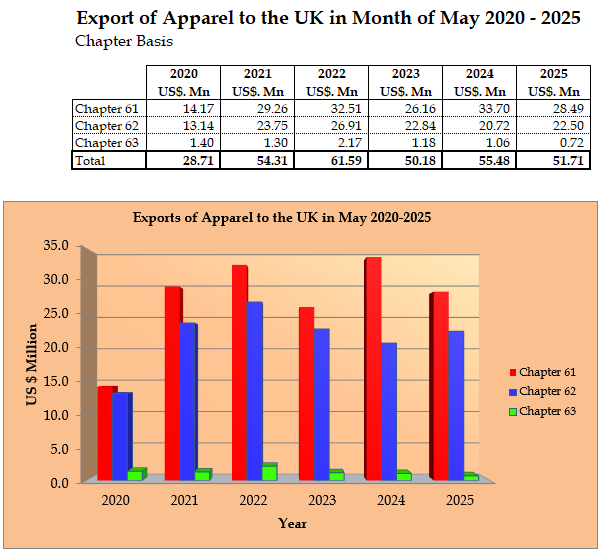
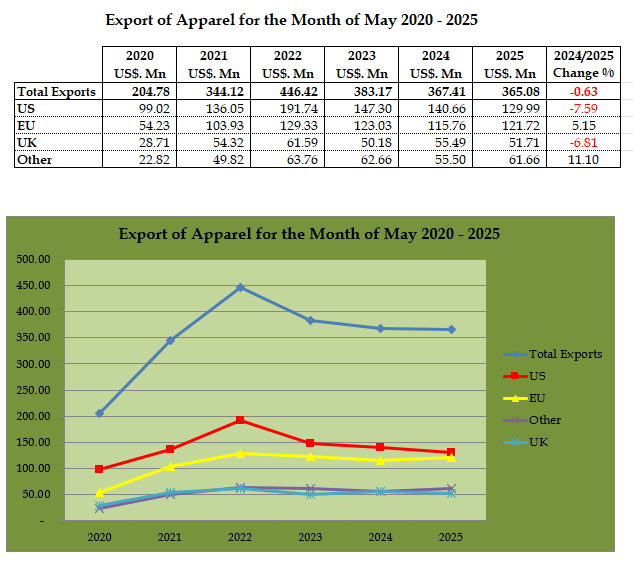
Sri Lanka Export Data For The Month of July 2026

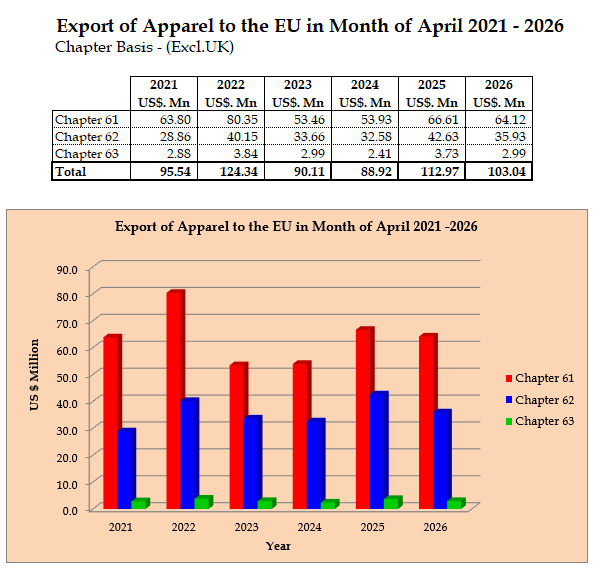
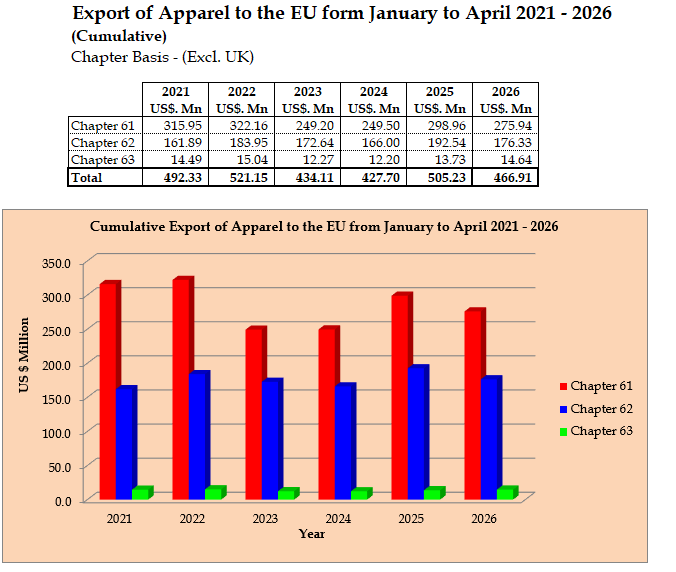
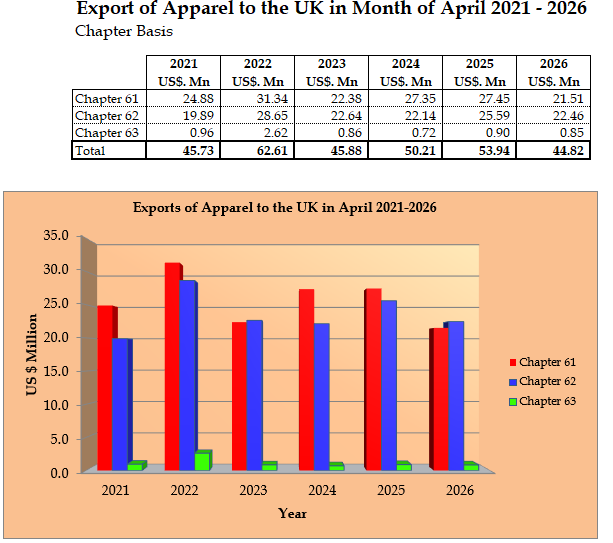
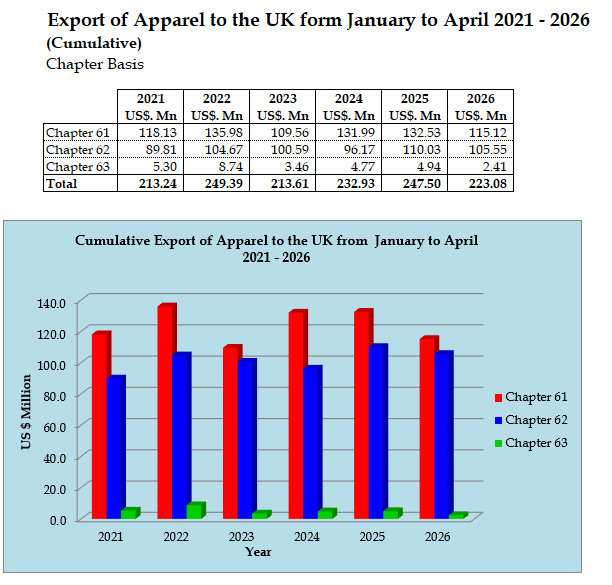
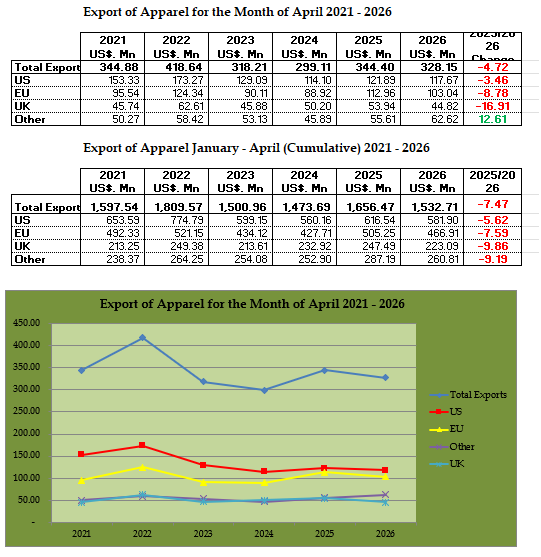
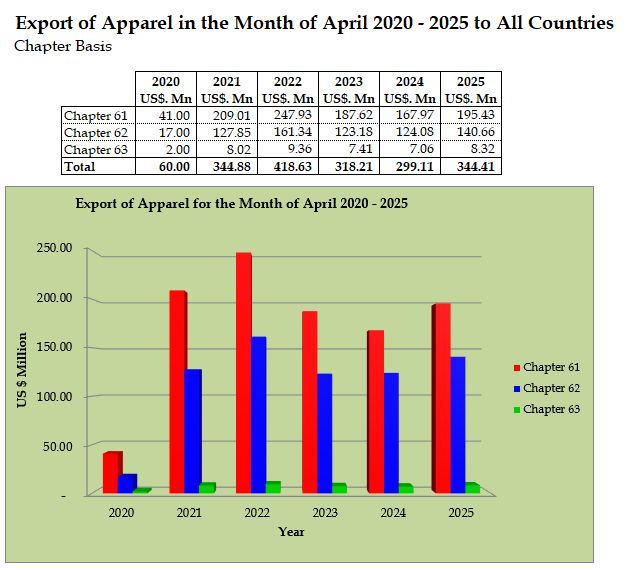
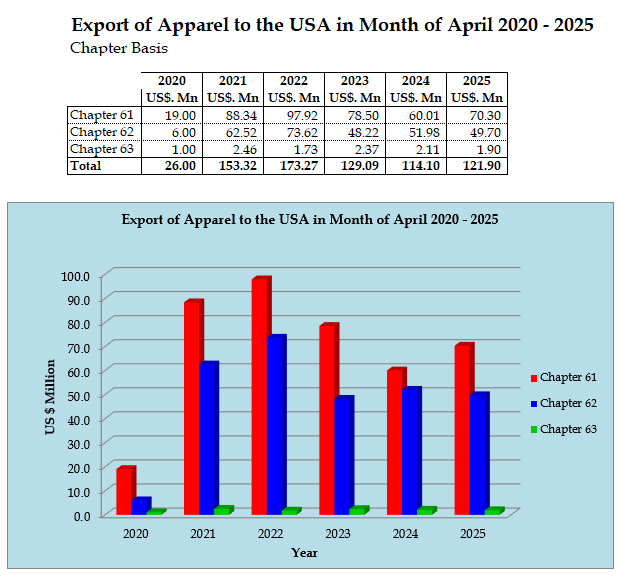
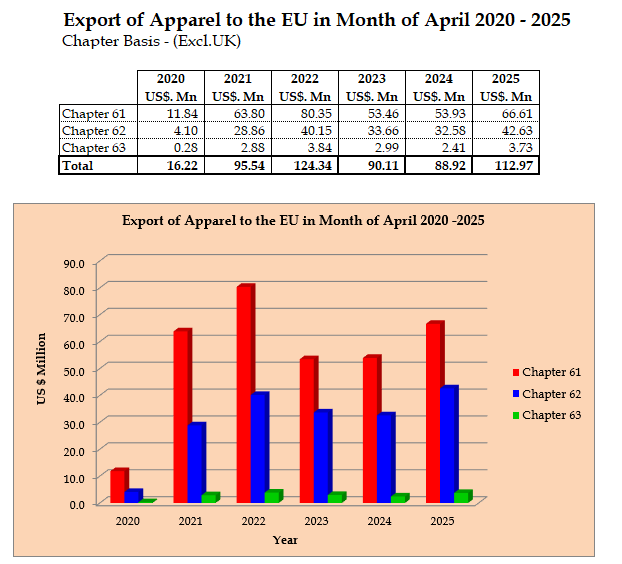
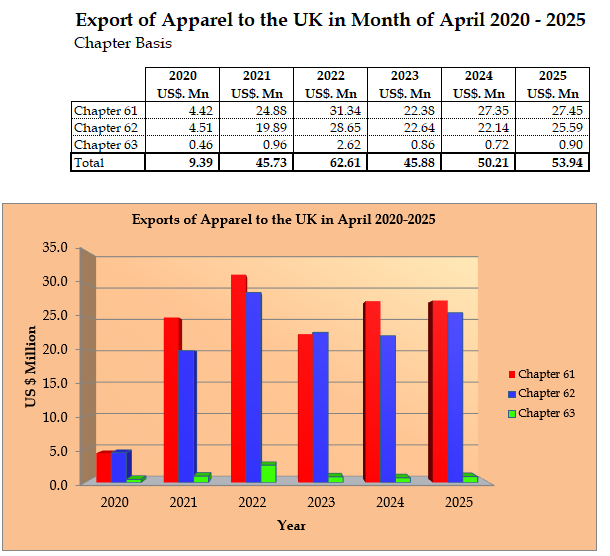
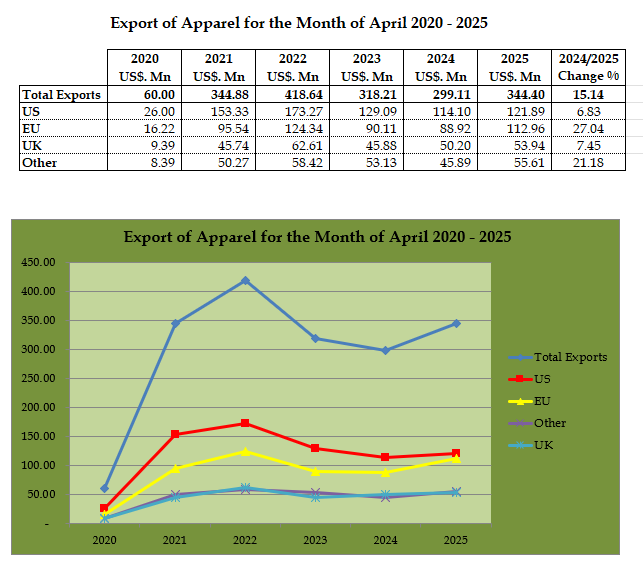
Sri Lanka Export Data For The Month of April 2026

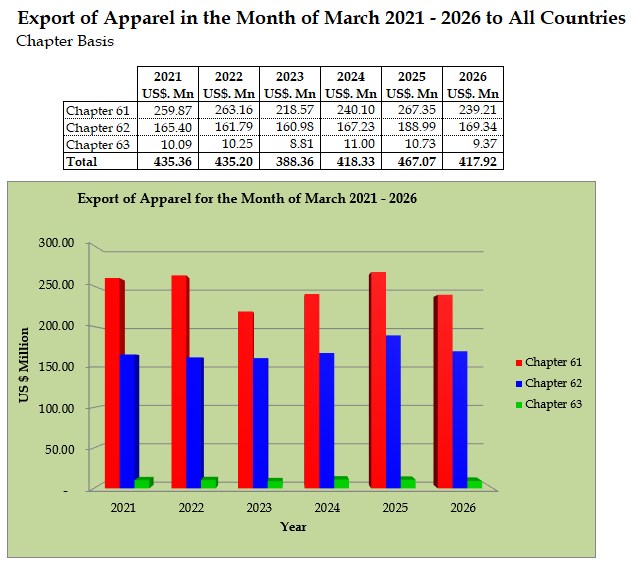
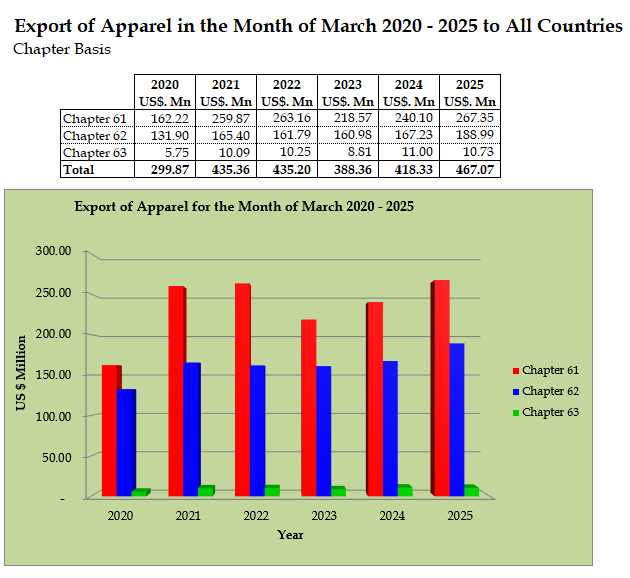
Sri Lanka Export Data For The Month of March 2026

Sri Lanka Export Data For The Month of February 2026

Sri Lanka Export Data For The Month of January 2026

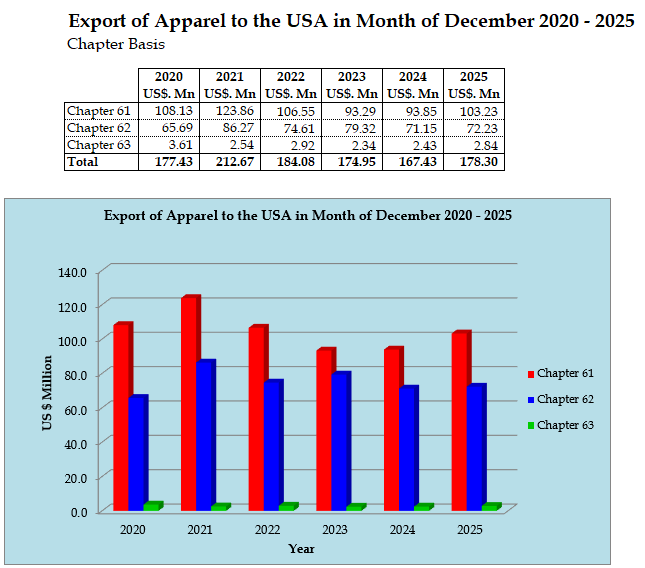
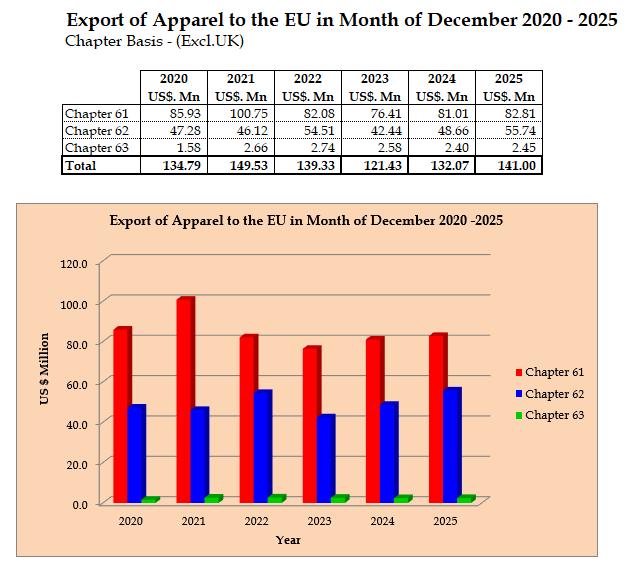
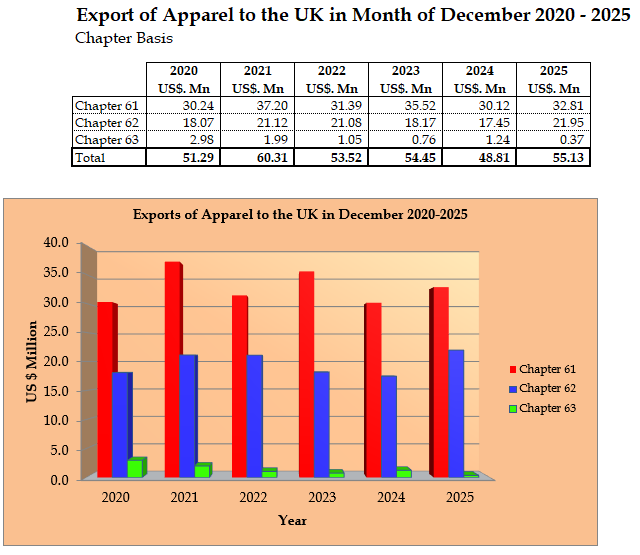
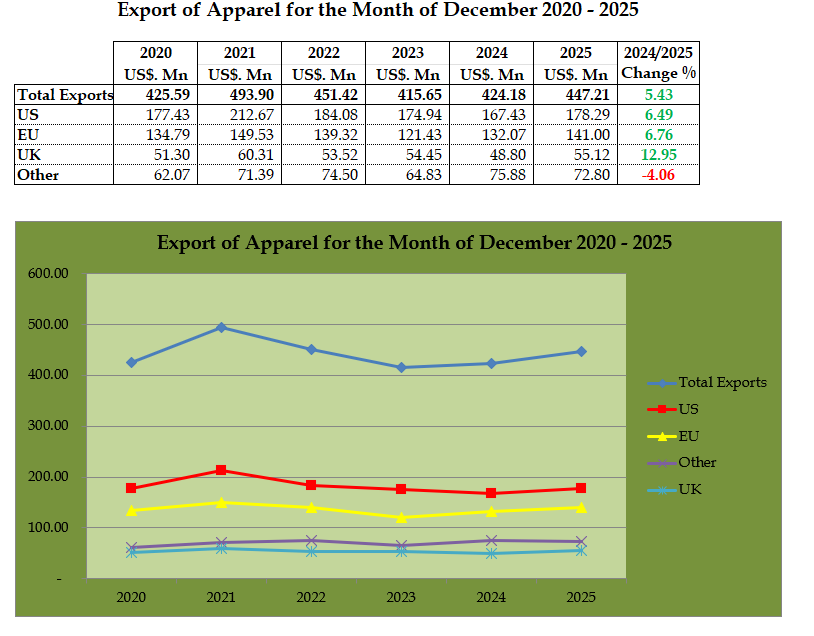
Sri Lanka Export Data For The Month of December 2025

Sri Lanka Export Data For The Month of October 2025

Sri Lanka Export Data For The Month of September 2025

Sri Lanka Export Data For The Month of August 2025

Sri Lanka Export Data For The Month of July 2025

Sri Lanka Export Data For The Month of June 2025

Sri Lanka Export Data For The Month of May 2025

Sri Lanka Export Data For The Month of April 2025

Sri Lanka Export Data For The Month of March 2025

Sri Lanka Export Data For The Month of February 2025

Sri Lanka Export Data For The Month of January 2025

Be a part of The SLASA Network
Become a Supplier